
Utah Business Phone Services: Complete Guide to VoIP, PBX & SIP
Delivering reliable, scalable, and cost-effective communication is critical for Utah businesses facing the limitations of traditional phone lines. Utah Business Phone Services combine cloud-based telephony, hosted PBX systems, and SIP trunking to modernize your calling infrastructure, reduce operational expenses, and boost productivity. In this guide, you’ll discover what business phone services entail and why they matter locally, how VoIP technology powers remote-friendly calling, the advantages of cloud PBX platforms, strategies for optimizing existing systems with SIP trunks, criteria for choosing a provider, integrated network considerations, and answers to the most common questions Utah companies have about phone solutions.
What Are Business Phone Services and Why Do Utah Businesses Need Them?
Modern business phone services use internet protocols to route calls, replacing copper lines with digital connectivity that lowers costs and improves flexibility. By shifting voice traffic onto IP networks, Utah companies gain advanced features and seamless integration with other digital tools.
Businesses in Utah now expect:
- Cloud-based call routing that cuts per-call expenses.
- Mobile and desktop softphones for distributed teams.
- Centralized management portals reducing on-site hardware needs.
- Scalability that adjusts line counts instantly.
- Advanced reporting for usage insights.
These capabilities not only streamline communications but also lay the foundation for growth and interoperability with other IT systems, driving us into the specific components that define modern phone systems.
What Defines Modern Business Phone Systems in Utah?
Modern phone systems unify analog voice networks under cloud control, enabling real-time provisioning and failover protection. By virtualizing private branch exchanges, companies harness software-driven routing, automated attendants, and real-time analytics—features that traditional on-premise switches cannot match. These innovations transition businesses into unified communications and support hybrid work cultures without the complexity of in-house PBX hardware.
How Do VoIP, Hosted PBX, and SIP Trunking Fit Into Business Phone Services?
VoIP converts voice into data packets sent over the internet, Hosted PBX delivers key switch-board functions via the cloud, and SIP trunking connects existing IP-PBX systems to the public telephone network over IP. Together, these layers empower cost-effective, feature-rich solutions that scale on demand and integrate with CRM, video conferencing, and mobile apps, giving Utah organizations the communication agility they need.
Why Are Utah Small and Mid-Sized Businesses Adopting These Solutions?
Utah’s small and mid-sized businesses embrace cloud telephony to eliminate large upfront hardware investments, streamline remote-worker connectivity, and consolidate voice and data billing. Local firms find that moving to managed services reduces maintenance overhead and redirects IT focus toward growth initiatives, reinforcing the shift toward digital transformation across the state.
What Are the Key Benefits of Upgrading to Modern Phone Services?
Upgrading means:
- Significant monthly cost savings compared to legacy line charges
- Instant scalability without on-site installs
- Enterprise-grade features like auto attendants and voicemail-to-email
- High availability with geographic failover
- Simplified user management through web portals
These benefits ensure Utah companies maintain competitive communications infrastructure, leading us to a deeper look at VoIP technology in particular.
How Do Business VoIP Services Work for Utah Companies?
Business VoIP services leverage internet connections to transmit voice calls, replacing traditional PSTN lines with packet-switched networks that lower long-distance charges and offer rich feature sets. By using codecs to compress audio data and SIP or proprietary protocols for session control, VoIP delivers crystal-clear calls alongside video and messaging integration.
What Are the Main Features of Utah Business VoIP Services?

Key features of Business VoIP services include:
- Call forwarding and simultaneous ring for never-missing critical calls
- Advanced voicemail options such as transcription and email delivery
- Softphone applications enabling desktop and mobile call handling
- Auto attendant menus that guide callers through self-service options
- Call analytics dashboards tracking usage and performance
These capabilities give Utah teams the flexibility to manage communications seamlessly from the office or the field, which naturally raises the question of call quality requirements.
How Does VoIP Improve Communication for Small Businesses in Utah?
VoIP improves communication by consolidating voice, video, and instant messaging into a single network, enhancing collaboration and reducing platform sprawl. The ability to provision new extensions remotely and integrate with business applications boosts team responsiveness, while packet-prioritization features ensure voice traffic remains uninterrupted during peak usage.
What Are the Internet Requirements for Reliable VoIP in Utah?
Reliable VoIP calls require a stable broadband connection—ideally fiber-optic service delivering at least 100 Mbps symmetrical bandwidth and Quality of Service (QoS) controls. Dedicated VLANs and network segmentation through managed routers prevent jitter and packet loss, maintaining call clarity and uptime for Utah offices.
Structured Communications, [Internet Speed is Needed for VoIP?], (n.d.)
VoIP Bandwidth Requirements
To achieve a voice call of sufficient quality, a minimum internet speed of 90 – 100 kbps (kilobits per second) is required. This amount must be multiplied per user.
How Much Do Utah Business VoIP Services Typically Cost?
VoIP pricing often follows a per-user, per-month model ranging from $20 to $35, depending on feature bundles and support levels. Volume discounts, annual service packages, or multi-service bundles with internet and cabling may yield further savings for growing Utah businesses. Discover specific plans at Connect Call’s Business VoIP page.
What Are Hosted PBX Systems and How Do They Benefit Utah Businesses?
Hosted PBX systems relocate enterprise switching functions into cloud data centers, removing the need for on-premise equipment and ongoing maintenance. By virtualizing call control software, these platforms deliver advanced call routing, mobile extension, and unified messaging—all managed through web interfaces that eliminate hardware complexity.
What Features Make Hosted PBX Ideal for Small and Mid-Sized Businesses?
Hosted PBX solutions offer:
- Automated attendants guiding callers 24/7
- Intelligent call routing directing calls based on time-of-day rules
- Remote-worker extension that treats home offices like HQ desks
- Centralized administration reducing IT workload
- Integrated voicemail-to-email and fax-to-digital delivery
Intratel, [What Is Hosted PBX & Why Should My Small Business Utilize It], (2023)
Benefits of Hosted PBX for Small Businesses
One of the primary advantages of choosing a hosted PBX solution is its cost effectiveness. Hosted PBX solutions are incredibly easy to scale up or down as needed.
How Does Cloud PBX Compare to On-Premise PBX for Utah Companies?
Cloud PBX provides monthly subscription pricing without capital outlays, rapid provisioning of new lines, and built-in disaster recovery. On-premise PBX requires dedicated hardware, space, and local technical support, which can limit agility. For Utah firms seeking fast growth and minimal IT complexity, the hosted model delivers superior flexibility and cost predictability.
How Can Hosted PBX Support Utah Businesses’ Growth and Scalability?
With hosted PBX, adding or removing users takes minutes rather than weeks, ensuring communications align with seasonal staffing fluctuations or acquisitions. This dynamic scaling lets Utah organizations expand multi-site operations or seasonal outreach campaigns without costly equipment swaps.
What Are the Cost Advantages of Hosted PBX Providers in Utah?
Hosted PBX providers eliminate capital expenditure on server hardware and PSTN gateways, roll maintenance into predictable service fees, and often include 24/7 technical support. Bundling hosted PBX with internet and network cabling services delivers additional discounts, maximizing return on investment for local businesses.
How Can SIP Trunking Solutions Optimize Existing Business Phone Systems in Utah?
SIP trunking connects an IP-PBX or hybrid phone system to the PSTN via internet links, replacing legacy T1 or PRI circuits with flexible, pay-as-you-grow channels. By leveraging SIP (Session Initiation Protocol), Utah companies lower voice transport costs and gain rapid provisioning of new lines without physical circuit installs.
What Is SIP Trunking and How Does It Work with IP-PBX Systems?
SIP trunking transports voice sessions over IP networks using SIP signaling for session setup and teardown. An IP-PBX registers SIP credentials with the trunk provider, allowing inbound and outbound dialing through virtual channels rather than copper circuits. This integration unlocks cost savings and remote-ready configurations.
What Are the Benefits of SIP Trunking for Utah Businesses?
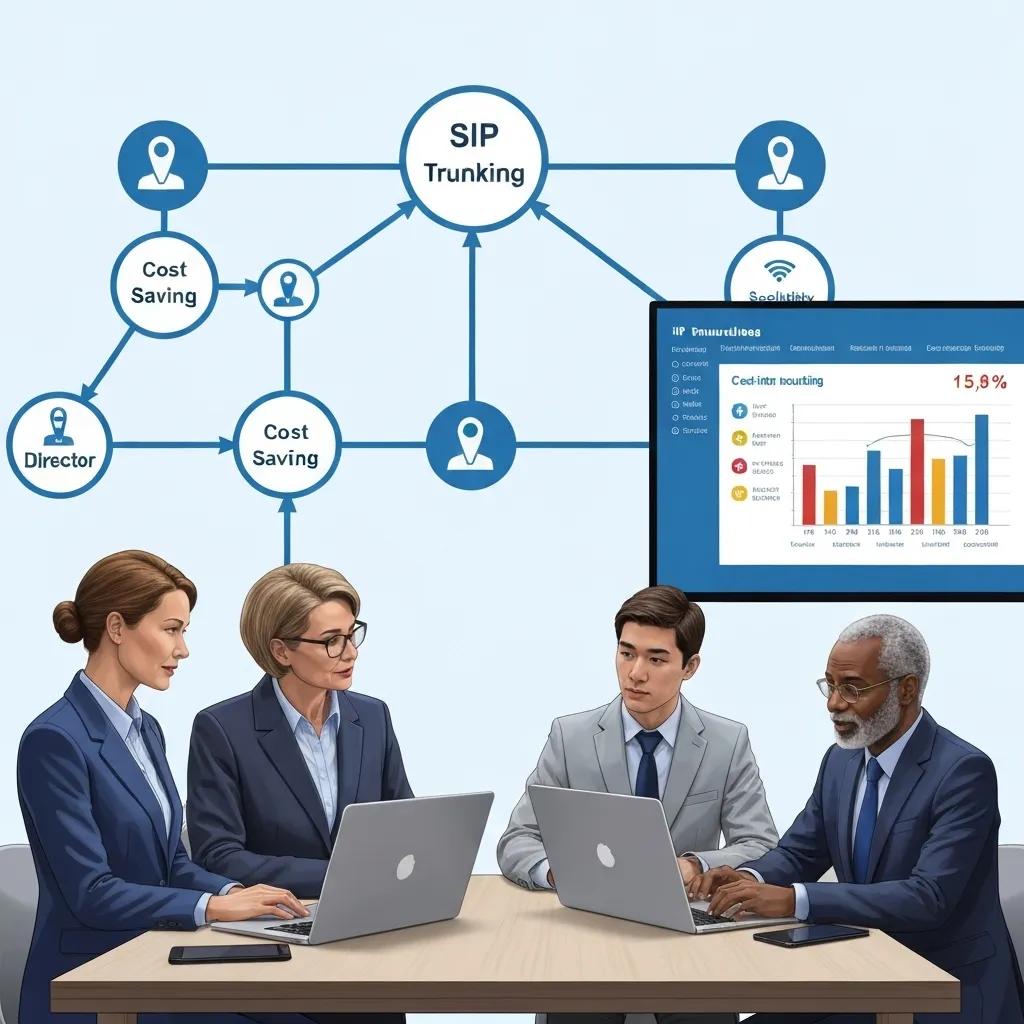
Utah businesses benefit from SIP trunking through:
- Reduced long-distance charges and per-channel fees
- Scalability that adds or removes concurrent call paths instantly
- Geographic redundancy with failover across multiple data centers
- Simplified network management via unified IP infrastructure
These advantages make SIP trunks an optimal choice for companies seeking continuity and cost control.
Fuse2, [How SIP Trunking Reduces Communication Costs for Businesses], (2025)
Cost Savings with SIP Trunking
With SIP trunking, businesses can significantly reduce expenses related to long-distance and international calls. Businesses can expect to save 30–60% on their monthly communications costs, depending on the SIP trunking pricing, call volume, and volume discounts.
How Does SIP Trunking Compare to Traditional Phone Lines in Utah?
Compared to T1 or analog lines, SIP trunks offer granular scalability (one channel at a time), lower setup fees, and rapid provisioning. Traditional circuits involve multi-week lead times and fixed-capacity billing, whereas SIP trunks deploy in hours with usage-based invoicing, delivering greater financial and operational flexibility.
What Are Typical SIP Trunking Costs and Savings for Utah Companies?
SIP trunking rates usually range from $15 to $30 per concurrent call path per month, with volume pricing for larger enterprises. Migrating from PRI circuits to SIP trunks can yield up to 40 percent savings on voice transport, and eliminating dedicated hardware further lowers total cost of ownership.
What Should Utah Businesses Look for When Choosing a Business Phone Service Provider?
Selecting a provider requires evaluating support responsiveness, network reliability, and plan flexibility. Utah businesses should prioritize local expertise to ensure fast onsite assistance, customizable service tiers that align with growth plans, and bundled offerings that include internet and cabling for single-vendor simplicity.
Key selection criteria include:
- Local support presence guaranteeing on-site and remote troubleshooting.
- Service-level agreements that uphold 99.99 percent uptime commitments.
- Customized packages allowing feature add-ons or seasonal scaling.
- Value-added services such as commercial cabling and network assessments.
- Transparent customer testimonials and case studies reflecting real Utah implementations.
Choosing a partner with proven local track record bridges the gap between cutting-edge technology and prompt, personalized support.
How Do Integrated Communication Solutions Enhance Utah Business Phone Services?
Integrated communication solutions combine voice, data, and network infrastructure to deliver a unified platform that maximizes uptime and user experience. Ensuring high-speed internet, structured cabling, and unified communications capabilities creates a seamless environment for voice and collaboration tools.
By layering these elements, Utah companies achieve end-to-end quality that supports growth, resilience, and productivity across all communication channels.
What Role Does High-Speed Internet Play in Business Phone Quality?
High-speed internet underpins VoIP voice quality by delivering consistent bandwidth and low jitter. Fiber connections with QoS prioritization ensure voice packets arrive without delay, directly enhancing call clarity and reducing dropped calls.
How Does Commercial Network Cabling Support Modern Phone Systems?
Professional cabling installations using Cat 6A or higher guarantee sufficient throughput for converged voice and data services. Properly terminated and labeled runs minimize electromagnetic interference, preserving voice integrity and network stability.
What Is Unified Communications and How Does It Benefit Utah SMBs?
Unified Communications (UC) merges voice, video conferencing, instant messaging, and presence into a cohesive platform. For Utah SMBs, UC streamlines workflows, enhances team collaboration, and reduces licensing overhead by consolidating multiple communication channels under one ecosystem.
How Can Connect Call Serve as a Comprehensive Communication Partner in Utah?
Connect Call delivers end-to-end solutions—including Business VoIP, Hosted PBX, SIP Trunking, high-speed internet, and structured cabling—backed by local support and customizable service plans. This single-source approach simplifies vendor management and ensures cohesive network performance across every layer of your communications stack.
What Are the Most Common Questions About Utah Business Phone Services?
Utah organizations often seek clarity on system suitability, internet requirements, cost comparisons, and local provider credibility. Below, each common concern is addressed in focused detail.
What Is the Best Business Phone System for Small Businesses in Utah?
The best system balances budget with feature needs; cloud-based VoIP and Hosted PBX platforms typically lead due to low start-up costs, per-user monthly pricing, and built-in scalability. Smaller teams often choose VoIP bundles that include essential features like call routing and voicemail-to-email, while growth-oriented companies prefer Hosted PBX for multi-site support and advanced call handling.
Do Utah Businesses Need Special Internet for VoIP?
Yes, for consistent call quality, businesses require broadband connections—preferably fiber with symmetrical speeds above 50 Mbps—and managed network devices with QoS settings. Segmenting voice traffic on a dedicated VLAN further isolates call data from general internet usage.
What Are the Benefits of Hosted PBX Systems?
Hosted PBX offers immediate access to enterprise-grade features without hardware investment, remote extension support for distributed staff, and centralized management through web portals. This model also provides built-in redundancy and automatic failover between data centers for unmatched uptime.
Who Are the Top Telecom Providers in Utah?
Local providers distinguish themselves by offering region-specific network infrastructure, rapid onsite support, and bundled cabling services. Choosing a partner with strong Utah presence and positive customer feedback ensures faster problem resolution and tailored solutions.
How Much Does VoIP Cost Per Month in Utah?
VoIP service fees generally range from $20 to $35 per user per month. Packages differ based on included features—such as video conferencing, toll-free minutes, and texting—and volume discounts are common for larger deployments.
Utah businesses find that aligning their communications strategy with a single local provider maximizes value, reliability, and dedicated support, empowering them to focus on growth rather than network maintenance.
Frequently Asked Questions
What are the security considerations for using VoIP services in Utah?
When using VoIP services, security is paramount. Utah businesses should implement measures such as encryption for voice data, secure passwords, and firewalls to protect against unauthorized access. Additionally, using Virtual Private Networks (VPNs) can enhance security for remote workers. Regular software updates and security patches are essential to mitigate vulnerabilities. Businesses should also consider working with providers that offer built-in security features, such as DDoS protection and intrusion detection systems, to safeguard their communications infrastructure.
How can businesses in Utah ensure high call quality with VoIP?
To ensure high call quality with VoIP, businesses should invest in a reliable high-speed internet connection, ideally fiber-optic, with sufficient bandwidth to handle voice traffic. Implementing Quality of Service (QoS) settings on routers prioritizes voice packets over other data, reducing latency and jitter. Regularly monitoring network performance and conducting speed tests can help identify issues before they affect call quality. Additionally, using high-quality VoIP hardware, such as headsets and phones, can further enhance the clarity of calls.
What types of businesses benefit most from Hosted PBX systems in Utah?
Hosted PBX systems are particularly beneficial for small to mid-sized businesses in Utah that require flexibility and scalability without the burden of maintaining physical hardware. Companies with remote or hybrid workforces can leverage hosted solutions to provide seamless communication across locations. Industries such as retail, healthcare, and professional services often find hosted PBX advantageous due to its cost-effectiveness and ability to integrate with other business applications, enhancing overall operational efficiency.
Can businesses in Utah integrate VoIP with existing CRM systems?
Yes, many VoIP providers offer integration capabilities with popular Customer Relationship Management (CRM) systems. This integration allows businesses in Utah to streamline their communication processes, enabling features such as click-to-call, automatic call logging, and customer data access during calls. By integrating VoIP with CRM, companies can enhance customer interactions, improve response times, and gain valuable insights into customer behavior, ultimately driving better sales and service outcomes.
What are the potential downsides of switching to VoIP for Utah businesses?
While VoIP offers numerous advantages, there are potential downsides to consider. Businesses in Utah may experience issues such as dependency on internet connectivity; if the internet goes down, so does the phone service. Additionally, initial setup costs and the need for employee training can pose challenges. Some users may also face concerns regarding call quality during peak internet usage times. It’s essential for businesses to weigh these factors against the benefits when considering a switch to VoIP.
How can Utah businesses prepare for a transition to SIP trunking?
To prepare for a transition to SIP trunking, Utah businesses should first assess their current phone systems and internet infrastructure. Ensuring a robust broadband connection with adequate bandwidth is crucial. Conducting a network audit can help identify any necessary upgrades. Additionally, businesses should engage with their SIP trunking provider to understand the setup process, including configuring firewalls and routers. Training staff on the new system and establishing a clear migration plan will also facilitate a smooth transition.