
How to Choose Utah’s Best Cloud Communication & VoIP Provider
Cloud communication for Utah businesses leverages scalable internet-based phone and messaging tools to replace legacy systems with flexible, feature-rich solutions. Decision-makers gain cost efficiency, improved team collaboration, and robust security while relying on local support. This guide defines core concepts, explores Business VoIP, Hosted PBX, SIP Trunking, UCaaS, security and compliance, and helps you evaluate Connect Call’s offerings to transform your company’s communications.
What Are Cloud Communication Solutions and Why Do Utah Businesses Need Them?
Cloud communication solutions deliver voice, video, and messaging services over the internet rather than on-premises hardware. By shifting telephony, conferencing, and collaboration tools to hosted platforms, Utah companies unlock remote-work capabilities, reduce capital expenses, and scale features on demand. For tailored implementation, Connect Call’s cloud communication offerings provide local expertise and 24/7 support.
Key benefits include:
- Enhanced scalability to add users instantly
- Reduced hardware and maintenance costs
- Unified tools that boost productivity
These advantages pave the way for understanding how unified communications integrate these services into a cohesive platform.
What Is Unified Communications and How Does It Benefit Utah SMBs?
Unified Communications (UC) combines voice, video, messaging, and presence into a single interface to streamline business workflows. By integrating these channels, Utah SMBs shorten decision cycles, eliminate platform fragmentation, and foster real-time collaboration across offices. As part of UC, tools like instant chat link with voicemail and conferencing, reducing communication silos for better customer service.
This unified approach sets the stage for examining how individual cloud phone systems enhance everyday productivity.
How Do Cloud Phone Systems Improve Business Productivity in Utah?
Cloud phone systems connect employees from any location through desktop and mobile apps, ensuring calls route seamlessly and messages synchronize across devices. Real-time analytics and call recording automate performance monitoring, while features like click-to-dial save time. Teams handle higher call volumes without infrastructure upgrades, accelerating response times and customer satisfaction.
A clear view of system components helps businesses select the right mix of services.
What Are the Key Components of Cloud Communication Solutions?
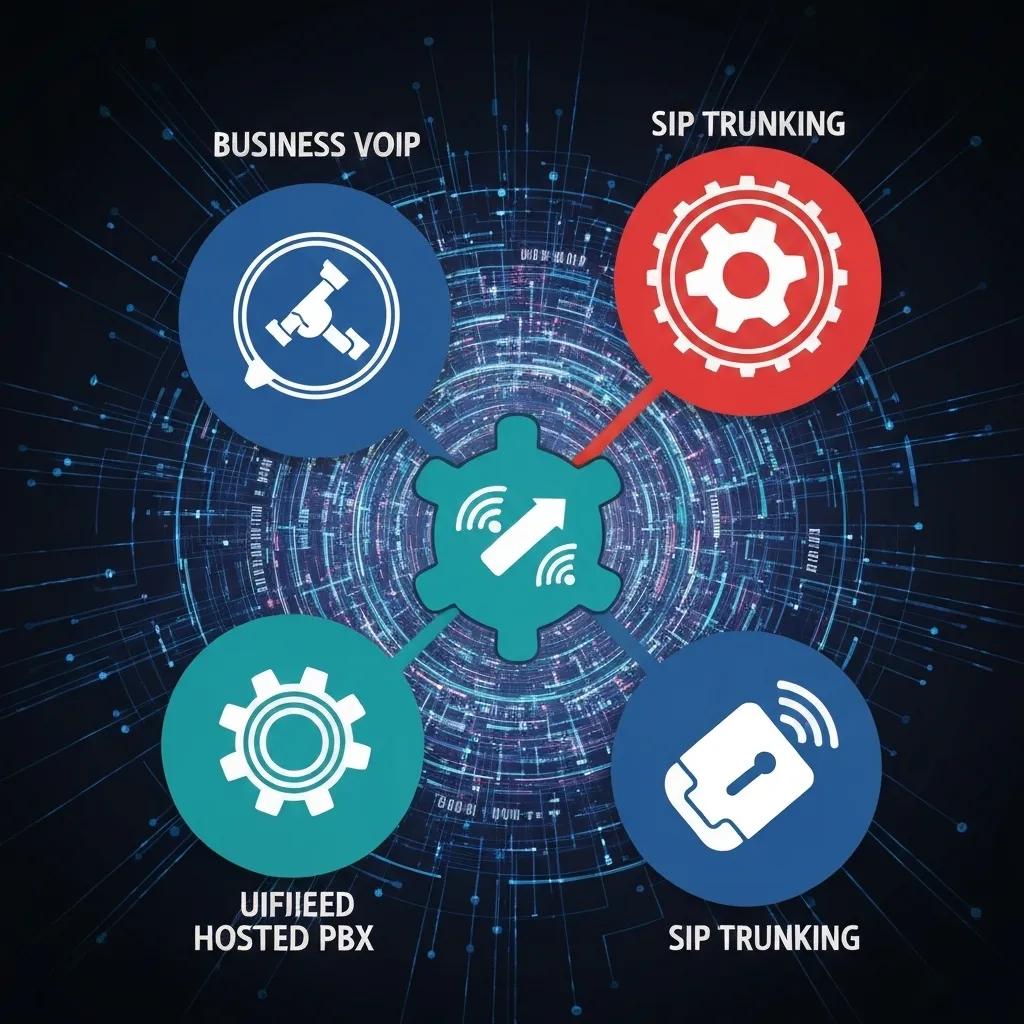
Cloud communication typically comprises Business VoIP, Hosted PBX, and SIP Trunking. Each element works together to deliver comprehensive UCaaS capabilities that meet Utah companies’ needs.
These components form the foundation for exploring specialized VoIP advantages next.
How Can Utah Businesses Benefit from Business VoIP Solutions?
Business VoIP solutions replace traditional lines with internet-based calling that cuts monthly fees and adds rich features without infrastructure changes. By leveraging cloud-hosted voice, Utah firms enjoy flexible user management, mobile integration, and advanced call controls.
Discover tailored packages on the Business VoIP Solutions Utah – Connect Call page.
What Features Make Business VoIP Ideal for Utah Companies?
Business VoIP includes call routing to distribute incoming calls efficiently, mobile-app integration so employees stay connected on the go, and voicemail-to-email transcription for quick access to messages.
Utah organizations see immediate gains in responsiveness and customer engagement from these capabilities.
How Does Business VoIP Reduce Communication Costs for Utah SMBs?
Business VoIP lowers expenses by consolidating calls on existing internet lines and eliminating separate PSTN charges.
By streamlining billing and trimming overhead, VoIP supports lean budgets and predictable forecasts for Utah SMBs.
How Does VoIP Support Remote Work and Business Continuity in Utah?
VoIP systems reroute calls to mobile or home devices automatically during outages, ensuring no downtime. Cloud portals let IT managers reassign numbers instantly and monitor service status in real time. These continuity features keep Utah teams productive even amid power or internet disruptions.
Robust continuity measures set the scene for evaluating Hosted PBX advantages next.
What Are the Advantages of Hosted PBX Solutions for Utah Businesses?

Hosted PBX provides a cloud-based switching system that replaces on-site hardware with virtual servers managed by the provider. Utah companies gain auto-attendant, call queueing, and conferencing features without capital investment.
Explore scalable options on the Hosted PBX Solutions for Utah Businesses – Connect Call page.
How Does Hosted PBX Enhance Scalability and Flexibility for Utah Companies?
Hosted PBX lets businesses add or remove extensions in minutes, aligning seat counts with seasonal demand. Virtual trunks adapt to call volume spikes automatically, preventing service degradation during product launches or peak seasons.
This flexibility supports growth in the Wasatch Front and beyond.
What Are the Cost Savings Compared to Traditional Phone Systems?
Cloud-hosted PBX eliminates upfront hardware costs and ongoing maintenance fees.
These savings free budget for strategic investments and technology upgrades.
How Do Utah Businesses Migrate to Hosted PBX Systems?
Migration steps include network assessment, number porting, equipment provisioning, and user training. Providers configure auto-attendants, call flows, and emergency dialing according to Utah regulations. A phased cut-over minimizes disruption and ensures team readiness.
With migration complete, many companies then optimize voice trunks via SIP solutions.
Why Is SIP Trunking a Cost-Effective Communication Solution for Utah Businesses?
SIP Trunking replaces traditional PSTN lines by carrying voice traffic over IP networks, reducing per-minute fees and consolidating bandwidth. Utah firms benefit from dynamic channel allocation and improved ride-through during ISP outages.
Learn more on the SIP Trunking Solutions Utah – Connect Call page.
What Is SIP Trunking and How Does It Integrate with Existing PBX Systems?
SIP Trunking connects your on-site or cloud PBX to the public phone network via internet links. It uses session initiation protocol to establish calls, requiring only an IP gateway and proper firewall rules.
Integration preserves current extensions and dialing plans.
How Does SIP Trunking Improve Call Quality and Reliability?
By routing voice packets over dedicated internet channels with QoS settings, SIP Trunking minimizes latency and jitter. Redundant internet paths automatically reroute calls during link failures, maintaining crystal-clear connections.
This reliability supports critical customer interactions without dropped calls.
What Are the Cost Benefits of SIP Trunking for Utah SMBs?
SIP Trunking reduces fixed line fees and per-minute charges, offering enterprise-grade voice at SMB budgets. Bundled channel plans deliver volume discounts, while concurrent call metrics align costs with actual usage.
These efficiencies complement VoIP and PBX savings to optimize overall telecom spend.
How Does Unified Communications as a Service (UCaaS) Transform Business Communication in Utah?
UCaaS delivers integrated voice, messaging, video conferencing, and collaboration tools from a single cloud platform, enabling Utah teams to work seamlessly across channels. Real-time presence and unified contact lists eliminate app switching and shorten response times.
This transformation accelerates project delivery and elevates customer experiences.
What Components Are Included in UCaaS for Utah Businesses?
UCaaS packages bundle Business VoIP, instant messaging, video meetings, screen sharing, and CRM integration. Administrators access analytics, user provisioning, and security controls through one portal for consistent policy enforcement.
These modular components empower teams to select required services.
How Does UCaaS Improve Team Collaboration and Productivity?
Real-time chat and file sharing within the UCaaS interface reduce email clutter and version conflicts. Integrated video meetings with one-click join enhance brainstorming sessions, while mobile clients keep remote staff engaged.
Collaboration workflows accelerate decision-making and project timelines.
What Makes UCaaS Scalable and Flexible for Growing Utah Companies?
UCaaS scales on demand—adding new users, conference bridges, and advanced features instantly without procurement delays. Regional data centers ensure low-latency performance across Utah, and modular pricing aligns with budget forecasts.
Such adaptability supports rapid expansion and market entry.
How Do Utah Businesses Ensure Security and Compliance in Cloud Communication?
Cloud communication security combines encryption, access controls, and compliance frameworks to protect sensitive data. Utah companies must safeguard customer information and meet industry regulations through robust protocols and disaster-recovery planning.
What Data Encryption and Privacy Measures Protect Utah Business Communications?
End-to-end TLS and SRTP encryption secure signaling and media streams, preventing eavesdropping and tampering. Role-based access control and multi-factor authentication restrict system entry to authorized users.
These measures maintain confidentiality and integrity of all voice and messaging traffic.
Which Compliance Standards Are Relevant for Utah Cloud Phone Systems?
Cloud phone systems often adhere to HIPAA for healthcare data, PCI-DSS for payment security, and SOC 2 for operational controls. Providers maintain audit logs, data residency options, and documented policies to help Utah firms pass regulatory exams.
Meeting these standards reduces risk and supports industry-specific needs.
How Does Connect Call Support Business Continuity and Disaster Recovery?
Connect Call’s redundant data centers, geo-diverse failover configurations, and real-time backups ensure service remains uninterrupted during outages. Automated failover routes calls to alternative sites or mobile devices, maintaining full functionality.
This continuity planning safeguards operations and reputation.
How Does Connect Call Compare to Other Cloud Communication Providers in Utah?
Connect Call combines local Utah expertise with enterprise-grade infrastructure to deliver personalized support and reliable service. Its transparent pricing, rapid deployment, and friendly Utah-based team differentiate it from national players and traditional resellers.
What Unique Benefits Does Connect Call Offer Utah Businesses?
Connect Call provides on-site consultation, customized call flow design, and dedicated account management rooted in Utah’s market dynamics. Local engineers understand Wasatch Front connectivity and regulatory requirements.
This localized approach yields faster response times and tailored solutions.
How Does Connect Call’s Pricing and Features Compare to RingCentral and Local Providers?
Connect Call’s plans include unlimited calling, advanced call routing, and UC features at competitive rates without hidden fees. Volume discounts, no-charge handset options, and flexible contracts deliver superior value compared to rigid national packages.
Transparent billing and feature-rich plans align costs with actual usage.
What Do Utah Customers Say About Connect Call’s Cloud Communication Solutions?
Customers report 30–40% cost reductions, 99.999% uptime, and improved team collaboration since switching. Reviews highlight “responsive support,” “seamless migration,” and “local expertise” as key differentiators that drive ongoing satisfaction.
These testimonials reflect the tangible impact of Connect Call’s services.
Utah businesses seeking modern, secure, and scalable communication will find that cloud solutions—powered by Business VoIP, Hosted PBX, SIP Trunking, and UCaaS—deliver immediate efficiency gains and long-term flexibility. By partnering with a local provider like Connect Call, companies benefit from personalized support, transparent pricing, and robust continuity planning. Evaluating features, costs, and compliance requirements ensures the right mix of services for your organization’s growth. Take the next step toward future-proof communication by exploring these cloud solutions today.
Frequently Asked Questions
What are the main differences between Business VoIP and traditional phone systems?
Business VoIP utilizes internet connections for voice communication, while traditional phone systems rely on physical lines. VoIP offers advanced features like call routing, voicemail-to-email, and lower costs due to flat-rate plans. In contrast, traditional systems often incur per-minute charges and require significant hardware investments. This shift not only reduces operational costs but also enhances flexibility and scalability, making VoIP a more attractive option for modern businesses.
How can businesses ensure a smooth transition to cloud communication solutions?
A smooth transition to cloud communication involves several key steps: conducting a thorough network assessment, planning for number porting, provisioning necessary equipment, and providing user training. Engaging with a knowledgeable provider can help configure features like auto-attendants and emergency dialing. A phased cut-over approach minimizes disruption, allowing teams to adapt gradually while ensuring that all functionalities are operational before fully switching over.
What role does customer support play in cloud communication services?
Customer support is crucial in cloud communication services, as it ensures that businesses can quickly resolve issues and optimize their systems. Local providers, like Connect Call, offer personalized support tailored to the unique needs of Utah businesses. This includes 24/7 assistance, proactive monitoring, and on-site consultations, which help maintain system reliability and enhance user experience, ultimately leading to improved productivity and satisfaction.
How do cloud communication solutions enhance customer service for Utah businesses?
Cloud communication solutions enhance customer service by providing tools that facilitate quick and efficient interactions. Features like call routing, real-time analytics, and integrated messaging allow teams to respond promptly to customer inquiries. Additionally, unified communications reduce silos, enabling seamless collaboration among team members. This results in faster resolution times and improved customer satisfaction, as businesses can address needs more effectively and maintain a professional image.
What security measures should businesses consider when using cloud communication?
When using cloud communication, businesses should prioritize security measures such as end-to-end encryption, multi-factor authentication, and role-based access controls. These protocols protect sensitive data from unauthorized access and ensure compliance with industry regulations. Regular security audits and disaster recovery planning are also essential to safeguard against potential breaches and maintain operational continuity, especially for businesses handling sensitive customer information.
How can businesses measure the effectiveness of their cloud communication solutions?
Businesses can measure the effectiveness of their cloud communication solutions through key performance indicators (KPIs) such as call quality, response times, and user satisfaction. Utilizing analytics tools provided by the communication platform can help track these metrics. Regular feedback from employees and customers can also provide insights into areas for improvement, ensuring that the communication system continues to meet evolving business needs and enhances overall productivity.