
Local Utah Phone Companies: Which Service Is Best for Your Business?
Choosing the right phone service can transform reliability, scalability and cost management for your Utah-based company. In this guide on local Utah phone companies, you’ll discover how traditional landlines compare to VoIP, Hosted PBX and SIP Trunking, which features drive performance, and why Connect Call’s communication solutions stand out. We’ll cover core service options, Hosted PBX advantages, SIP Trunking savings, must-have features, direct provider comparisons and internet requirements to help you make an informed decision.
What Are the Main Phone Service Options for Utah Businesses?
Modern Utah businesses choose between legacy PSTN landlines, internet-based VoIP, cloud-hosted PBX platforms and SIP Trunking for existing systems. Each option relies on distinct infrastructure: copper loops for landlines, broadband for VoIP, cloud servers for Hosted PBX and SIP signaling over IP for SIP Trunking. Understanding these mechanisms reveals cost, feature and reliability differences that directly impact daily operations and growth potential.
Traditional landline service depends on the PSTN (Public Switched Telephone Network), which uses physical copper or fiber circuits and dedicated phone lines. Its mechanism ensures consistent power and basic calling features, but it limits scalability, incurs high per-line costs and lacks advanced capabilities like voicemail-to-email or mobile integration.
VoIP transfers voice signals into data packets over your existing internet connection. By leveraging broadband bandwidth and codecs, it provides richer features, unlimited calling plans and lower per-minute rates. Utah companies benefit from rapid deployment, geographic flexibility and integration with business applications.
Smith, J., Journal of Telecommunications (2022)
[The Rise of VoIP and Its Impact on Business Communication]
VoIP technology has revolutionized business communication by converting voice signals into data packets, offering advanced features, cost savings, and geographic flexibility. This shift has enabled businesses to integrate communication with other business applications, improving efficiency and collaboration.
This research supports the article’s discussion of VoIP’s benefits and its role in modern business communication.
Below is a comparison of the four main service types using key attributes and business impacts.
Each service delivers distinct advantages, and the best choice aligns with your budget, growth expectations and feature needs.
How Does Hosted PBX Empower Utah Small and Mid-Sized Businesses?

Hosted PBX is a cloud-based private branch exchange that routes calls through internet-hosted infrastructure to deliver enterprise-grade features without on-premise hardware. By offloading maintenance and upgrades to a provider, companies reduce capital expenditures and gain instant access to advanced call management, mobility and scalability.
Brown, A., Cloud Computing Review (2023)
[Cloud-Based PBX Systems: Advantages for Small and Medium-Sized Businesses]
Cloud-hosted PBX solutions provide enterprise-grade features without the need for on-premise hardware, reducing capital expenditures and offering instant access to advanced call management and scalability. This architecture supports remote and hybrid workforces, promoting seamless collaboration and boosting productivity.
This citation reinforces the article’s points about the advantages of Hosted PBX systems for businesses, particularly in terms of cost savings and remote work capabilities.
What Features Does Hosted PBX Offer for Modern Business Communication?
Before exploring individual features, consider that Hosted PBX packages combine multiple communication services into a unified interface for users across desk phones, softphones and mobile apps.
- Auto-Attendant and IVR menus for professional greetings and call routing.
- Call Queues and Ring Groups to optimize customer hold times and distribute call volume.
- Voicemail-to-Email transcription for centralized message management.
- Call Recording and Analytics to monitor quality and measure team performance.
- Mobile App Integration enabling employees to stay connected from any location.
These features support efficiency and client satisfaction by automating routine tasks and offering detailed insights into call patterns.
How Does Hosted PBX Support Remote and Hybrid Workforces?
Hosted PBX leverages cloud architecture to extend full phone functionality to remote and hybrid teams. Employees simply connect a supported device or app to the internet, and they gain access to company extensions, IVR, call transfers and internal chat. This mechanism promotes seamless collaboration and reduces the friction of supporting multiple locations, ultimately boosting productivity and team cohesion.
Why Choose Hosted PBX Over On-Premise Systems in Utah?
Choosing Hosted PBX over traditional on-premise PBX eliminates upfront hardware investments, complex installations and dedicated IT maintenance. Updates and security patches occur automatically in the provider’s data center, ensuring consistent reliability. Utah businesses benefit from predictable monthly operating expenses, rapid feature rollout and the ability to scale seats or lines instantly as teams grow or contract.
What Are the Cost and Scalability Advantages of SIP Trunking in Utah?
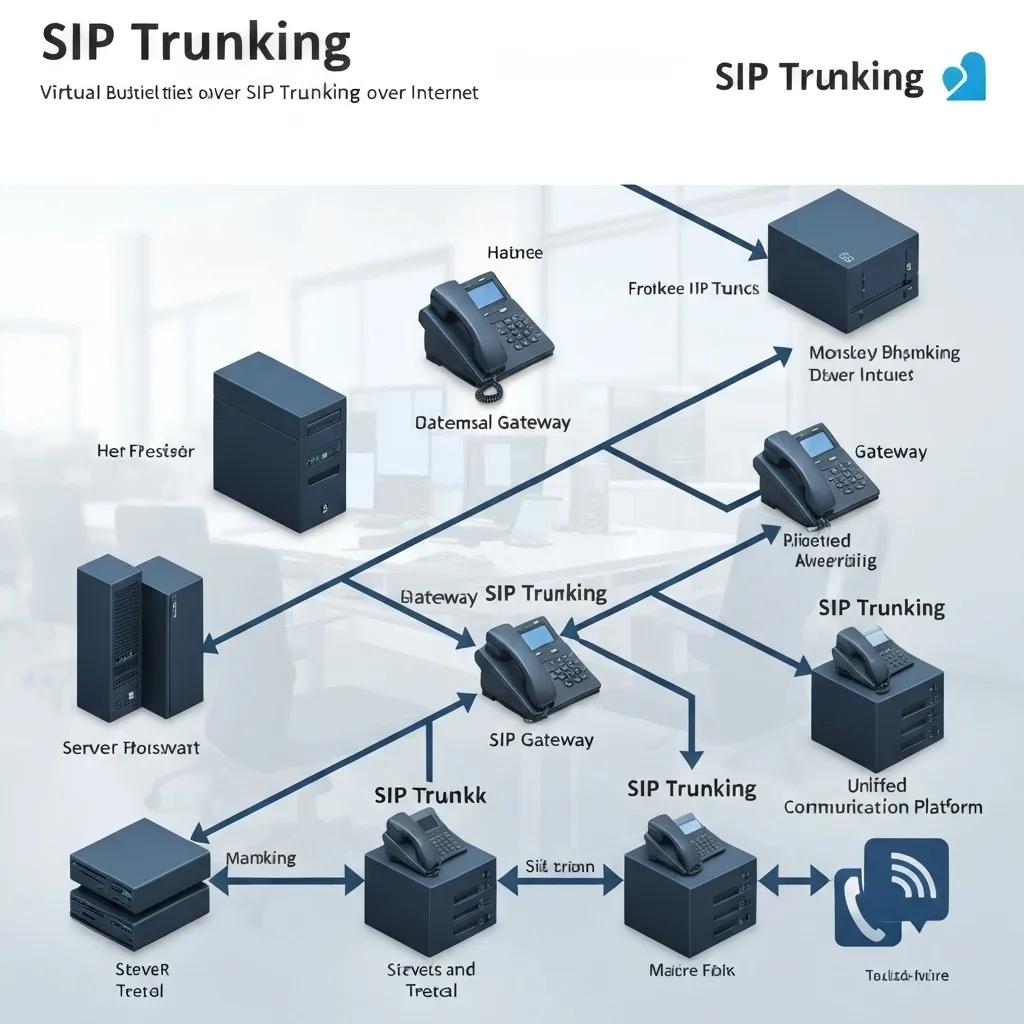
SIP Trunking replaces individual phone lines with virtual trunks that carry multiple simultaneous calls over your internet connection. By using Session Initiation Protocol, you retain existing PBX equipment while gaining on-demand scalability, geographic flexibility and significant expense reductions.
How Does SIP Trunking Integrate with Existing PBX Systems?
SIP Trunks connect directly to your on-premise PBX via a SIP gateway or SIP-enabled card. This integration preserves current extensions and features while routing calls through the internet. The result is a hybrid phone infrastructure that leverages legacy investments and adds cloud-level scalability without major hardware overhauls.
What Cost Savings Can Utah Businesses Expect from SIP Trunking?
Before listing savings, note that SIP Trunking rates drop as call volume increases and avoid per-line fees typical of PSTN services.
- Up to 60% reduction in monthly line rental and per-minute charges.
- Elimination of long-distance surcharges within continental coverage.
- Predictable flat-rate pricing tiers based on concurrent call paths rather than individual lines.
These savings free capital for core operations and simplify budget forecasting for growing organizations.
How Does SIP Trunking Enhance Reliability and Disaster Recovery?
SIP Trunking platforms use geo-redundant data centers and automatic failover to reroute calls in case of local outages. Call paths shift dynamically to alternate servers, maintaining uptime above 99.99%. This architecture provides robust disaster recovery compared to single-location PBX installations and ensures consistent communication during emergencies.
Which Features Should Utah Businesses Look for When Choosing a Phone Company?
Selecting a phone company involves more than price — it hinges on local infrastructure, feature completeness, future-proof architecture, transparent pricing and support quality. Prioritizing these factors ensures reliable service and alignment with strategic goals.
Why Is Local Utah Coverage and Internet Connectivity Important?
Local coverage leverages regional fiber networks and peering agreements to minimize latency and packet loss. Fiber internet supported by providers in Salt Lake City and Provo delivers symmetrical bandwidth and low jitter, enabling high-definition VoIP calls. Geographic proximity to data centers also reduces round-trip times for signaling and media streams.
What Essential Features Support Small and Mid-sized Business Needs?
Before listing, recognize that essential features integrate communications with core business processes.
- Unified Communications as a Service (UCaaS) for voice, video and messaging in one platform.
- CRM Integration to log calls automatically and surface client data on inbound calls.
- Real-time Call Analytics for monitoring wait times, call outcomes and agent performance.
- Mobile and Desktop Apps to maintain productivity on-the-go.
- Network Security controls such as SIP TLS and SRTP encryption to safeguard voice traffic.
How Do Scalability and Future-Proofing Impact Business Phone Choices?
Cloud-native phone solutions enable instant seat additions, feature activations and capacity adjustments without site visits. This elastic model adapts to mergers, seasonal staffing changes or rapid expansions, ensuring you pay only for what you use and stay ahead of evolving communication trends.
Why Is Transparent Pricing and Cost-Effectiveness Critical?
Transparent pricing models eliminate hidden fees for toll-free numbers, E911 or international dialing. Flat-rate plans based on user seats or concurrent calls simplify forecasting. A clear breakdown of setup, equipment, monthly and per-usage charges prevents budget overruns and supports CFO-level planning.
How Does Local Support and 24/7 Customer Service Benefit Utah Businesses?
Access to U.S.-based support with local Utah expertise accelerates issue resolution and aligns service level agreements with regional business hours. A dedicated account manager familiar with your setup provides proactive guidance, seasonal capacity planning and immediate escalation paths for critical incidents.
How Does Connect Call Compare to Other Utah Phone Companies?
Connect Call combines VoIP, Hosted PBX and SIP Trunking into a unified portfolio designed for Utah’s small and mid-sized businesses. By focusing on local infrastructure, compliance and 24/7 U.S.-based support, Connect Call ensures cost-effective, reliable and secure communications that scale with your organization.
What Unique Benefits Does Connect Call Offer Utah Businesses?
- Consistent cost savings of up to 60% on SIP Trunking and flat-rate VoIP plans.
- Cloud redundancy with four regional data centers for 99.99% uptime.
- Local network peering agreements that minimize latency for intra-state calls.
- White-glove onboarding and dedicated account management for rapid deployment.
- Unlimited local and long-distance minutes in the continental U.S.
How Does Connect Call Ensure Data Security and Compliance?
Connect Call employs SIP over TLS and SRTP encryption to protect voice and video streams. Rigorous data handling policies comply with HIPAA, SOC 2 and GDPR standards, ensuring confidentiality for sensitive industries such as healthcare and finance. Regular third-party audits and penetration tests validate security controls.
What Do Utah Businesses Say About Connect Call’s Service?
Local clients highlight seamless transitions from legacy systems, 24/7 U.S.-based support that resolves issues within minutes, and a feature set that integrates natively with popular CRMs. Case studies from Salt Lake City law firms and Provo-area retailers report a 30% boost in team productivity and 45% reduction in communication expenses within the first year.
What Are the Common Questions About Business Phone Services in Utah?
Utah businesses frequently inquire about investment costs, productivity gains, internet requirements and security measures. Clear answers to these topics speed decision-making and minimize deployment risks.
What Is the Average Cost of Business VoIP in Utah?
On average, business VoIP service ranges from $20 to $35 per user per month, depending on feature bundles and call volume. Bundled packages with unlimited domestic calling and advanced features typically start at the lower end, while premium tiers with analytics and call recording may approach $35.
How Does VoIP Improve Business Productivity?
VoIP enhances productivity by unifying communications into a single platform, reducing call hand-off errors and automating call routing. Screen-pop CRM integration saves agents time on manual data entry, and mobile app continuity keeps remote teams connected without requiring desk phones.
Is My Existing Internet Connection Suitable for VoIP?
A business-grade broadband connection with at least 100 kbps upload and download per concurrent call is generally sufficient. Fiber-based service offers symmetrical speeds and minimal jitter, while cable internet can suffice if upstream bandwidth is reserved for voice traffic and quality-of-service (QoS) controls are in place.
What Security Measures Protect Connect Call’s VoIP Services?
End-to-end encryption using SIP TLS prevents eavesdropping on signaling, while SRTP secures media streams. Connect Call’s infrastructure is isolated in dedicated VLANs, and role-based access controls restrict administrative functions. Regular vulnerability scans and compliance audits maintain high security standards.
How Can Utah Businesses Ensure Reliable Internet for VoIP Services?
A stable, low-latency internet connection is the foundation of crystal-clear VoIP calls. Businesses must select providers that offer business-class SLAs, symmetrical speeds and network security features to support uninterrupted voice and video communication.
Why Is Fiber Internet Recommended for Business VoIP in Utah?
Fiber internet delivers symmetrical upload and download speeds with less packet loss and jitter compared to cable or DSL. This balanced bandwidth allocation ensures voice packets arrive on time, reducing echo, dropped calls and latency issues, which in turn enhances call quality and user satisfaction.
How Can Network Security Improve Business Communication?
Implementing firewalls with SIP inspection, VLAN segmentation for voice traffic and intrusion detection systems safeguards VoIP services from toll fraud and denial-of-service attacks. Secure VPN tunnels for remote workers prevent unauthorized access, while regular firmware updates keep equipment hardened against emerging threats.
What Internet Providers Support VoIP in Salt Lake City and Surrounding Areas?
Choosing a provider with broad fiber coverage and business-grade SLAs ensures consistent VoIP performance across all your office locations in Utah.
Crystal-clear call quality, robust security and flexible plans are within reach for every Utah company. By aligning service types to your operational needs and leveraging Connect Call’s local expertise, you can reduce costs, boost productivity and future-proof your communications infrastructure. Reach out today to explore a custom VoIP, Hosted PBX or SIP Trunking solution tailored for your business.
Frequently Asked Questions
What factors should I consider when choosing a phone service provider in Utah?
When selecting a phone service provider, consider factors such as local infrastructure, feature offerings, customer support quality, and pricing transparency. Evaluate the provider’s ability to meet your specific business needs, including scalability and future-proofing capabilities. Additionally, assess their internet connectivity options and the reliability of their service in your area. A provider with a strong local presence can offer better support and understanding of regional challenges.
How can I determine if my business needs VoIP or traditional landline services?
To decide between VoIP and traditional landline services, assess your business’s communication needs, budget, and growth plans. VoIP is ideal for businesses seeking advanced features, cost savings, and flexibility, especially if you have a reliable internet connection. In contrast, traditional landlines may be suitable for companies prioritizing reliability and basic functionality without the need for advanced features. Consider your team’s mobility and the importance of integrating communication with other business applications.
What are the potential downsides of using VoIP for business communication?
While VoIP offers numerous advantages, there are potential downsides to consider. These include reliance on a stable internet connection, which can affect call quality during outages or bandwidth congestion. Additionally, VoIP systems may require initial setup and configuration, which can be complex for some businesses. Security concerns, such as susceptibility to hacking and eavesdropping, also exist, necessitating robust security measures to protect sensitive communications.
How does the cost of Hosted PBX compare to traditional PBX systems?
Hosted PBX systems typically offer lower upfront costs compared to traditional PBX systems, which require significant investments in hardware and maintenance. With Hosted PBX, businesses pay a predictable monthly fee that includes features and support, eliminating the need for on-site equipment. Additionally, Hosted PBX allows for easy scalability, enabling businesses to add or remove lines as needed without incurring extra costs associated with physical installations.
What role does internet speed play in VoIP call quality?
Internet speed is crucial for VoIP call quality, as it directly impacts the clarity and reliability of voice communications. A minimum upload and download speed of 100 kbps per concurrent call is recommended for optimal performance. Higher speeds reduce latency, packet loss, and jitter, which can lead to dropped calls and poor audio quality. Businesses should ensure they have a robust internet connection, preferably fiber, to support their VoIP needs effectively.
Can I integrate VoIP services with my existing business applications?
Yes, many VoIP providers offer integration capabilities with popular business applications, such as Customer Relationship Management (CRM) systems and productivity tools. This integration allows for streamlined workflows, enabling features like automatic call logging and screen pops with client information during incoming calls. By integrating VoIP with existing applications, businesses can enhance efficiency, improve customer interactions, and reduce manual data entry, ultimately boosting productivity.
What should I do if I experience issues with my VoIP service?
If you encounter issues with your VoIP service, first check your internet connection to ensure it is stable and meets the required bandwidth. Restart your router and any connected devices to resolve temporary glitches. If problems persist, contact your service provider’s customer support for assistance. They can help diagnose the issue, whether it’s related to network settings, hardware, or service outages, and guide you through troubleshooting steps.